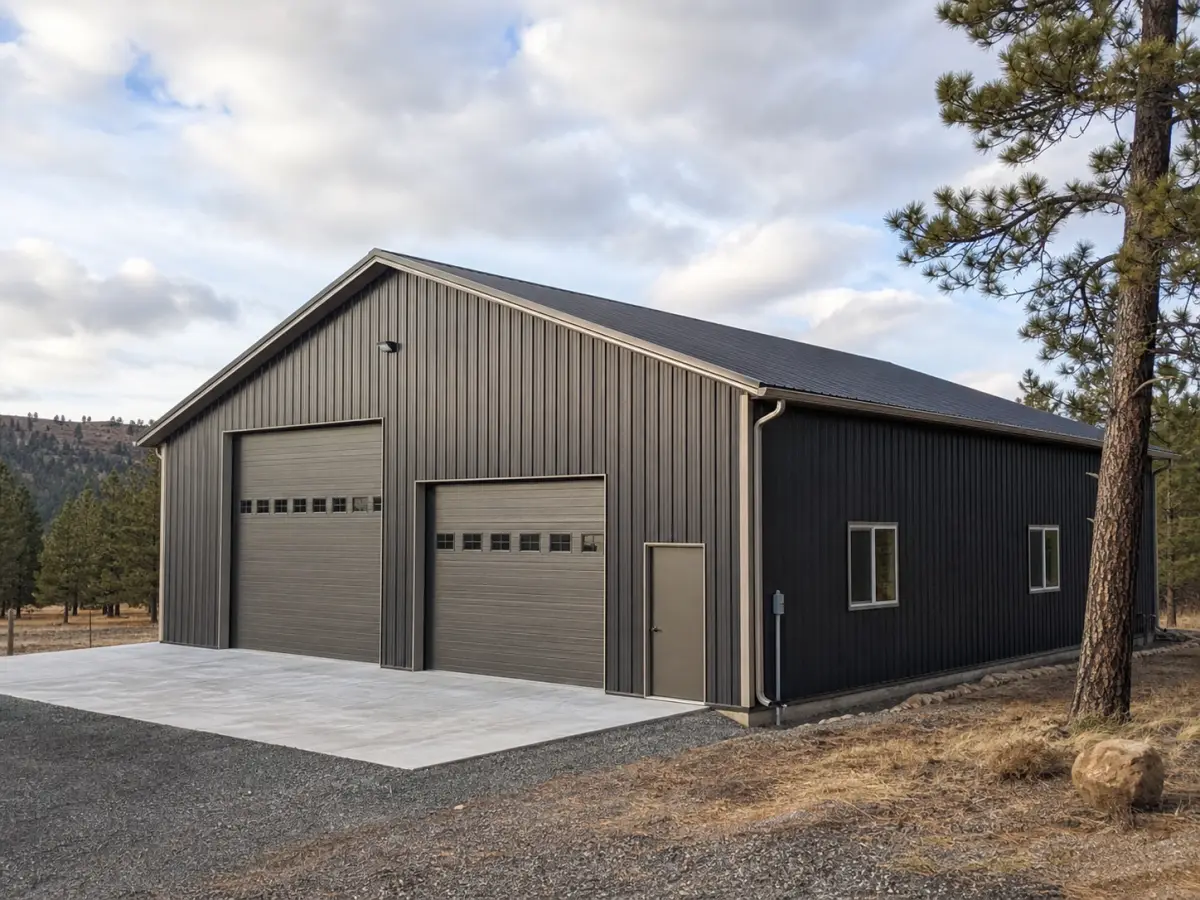
Shops & Garages
Vehicle bays, workshop space, and storage sized under a non-engineered size cap or built larger with an engineered design.
Shop & garage details →
A pole barn in Spokane is planned around county snow load, a 24-inch frost line, and the permit counter for that parcel. Request quotes from independent post-frame contractors for shops, barns, and garages. This is a free referral. We do not perform the work.
Pole building, sometimes called post-frame construction, sets pressure-treated posts on footings instead of pouring a continuous foundation. That method covers a wide range of building types across Spokane County and North Idaho, from a single-bay shop on a residential lot to a multi-bay agricultural building on acreage. The same framing approach scales up or down, which is part of why it shows up on so many different kinds of property here.
Vehicle bays, workshop space, and storage sized under a non-engineered size cap or built larger with an engineered design.
Shop & garage details →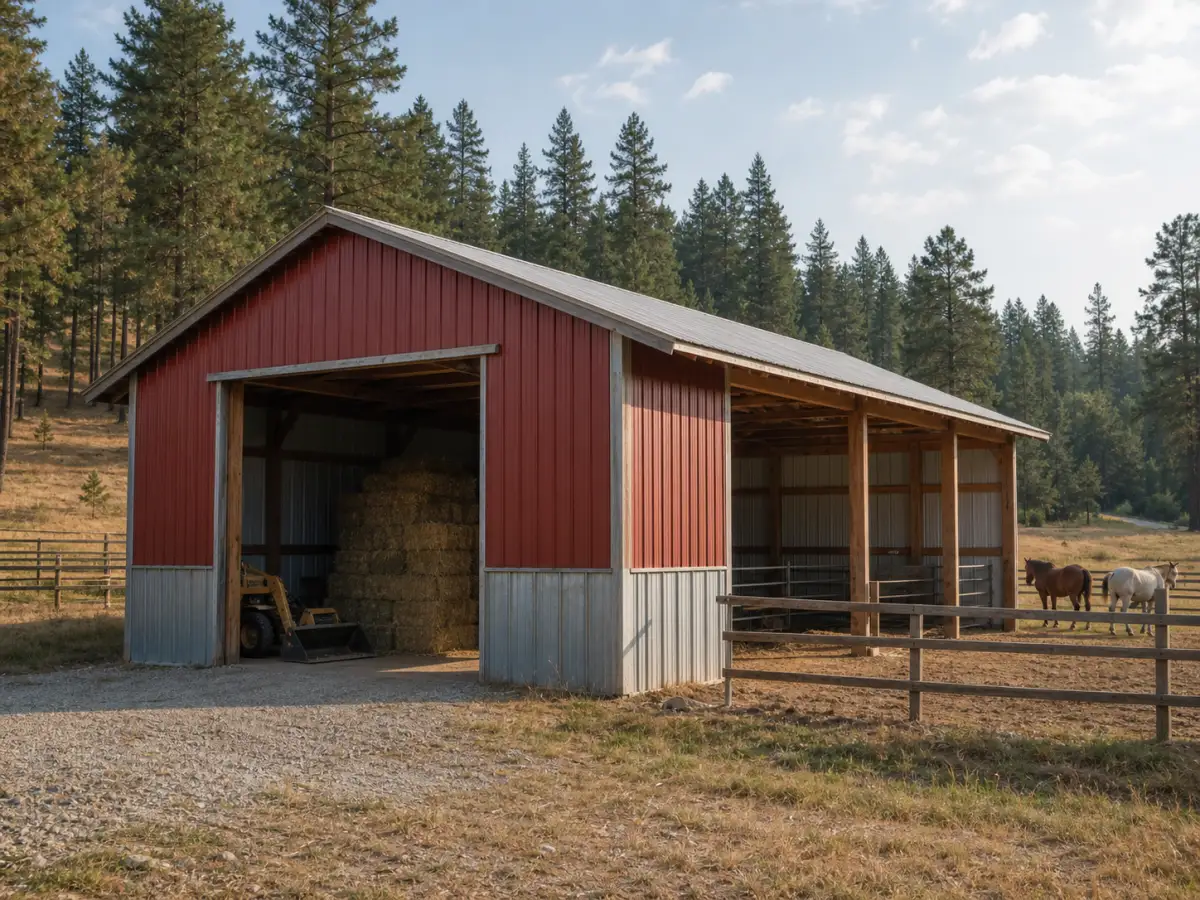
Equipment storage, hay bays, and horse barns with loafing sheds, planned around Spokane and Kootenai County rules.
Agricultural & barn details →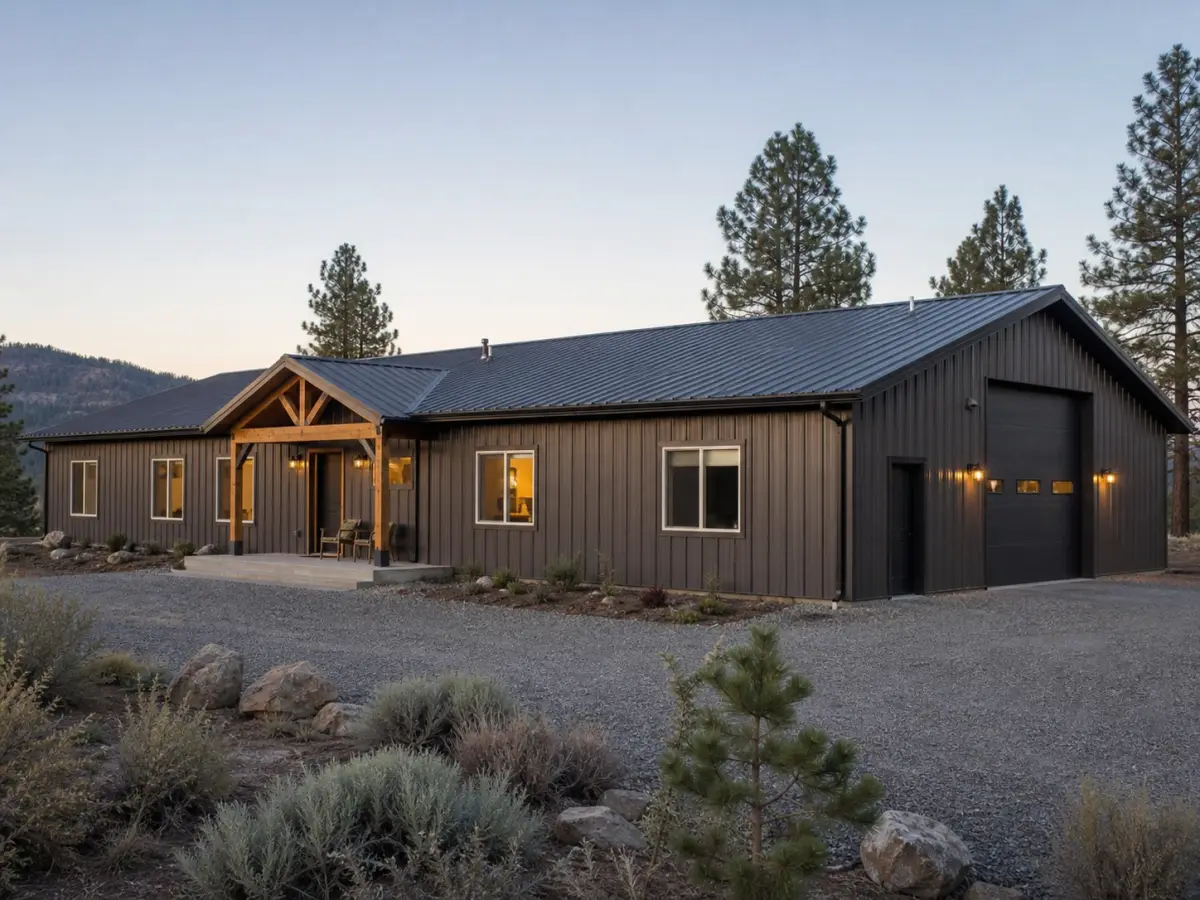
Shop-with-living-quarters layouts, sometimes called a "shouse," combining workspace and a finished home under one roof.
Barndominium details →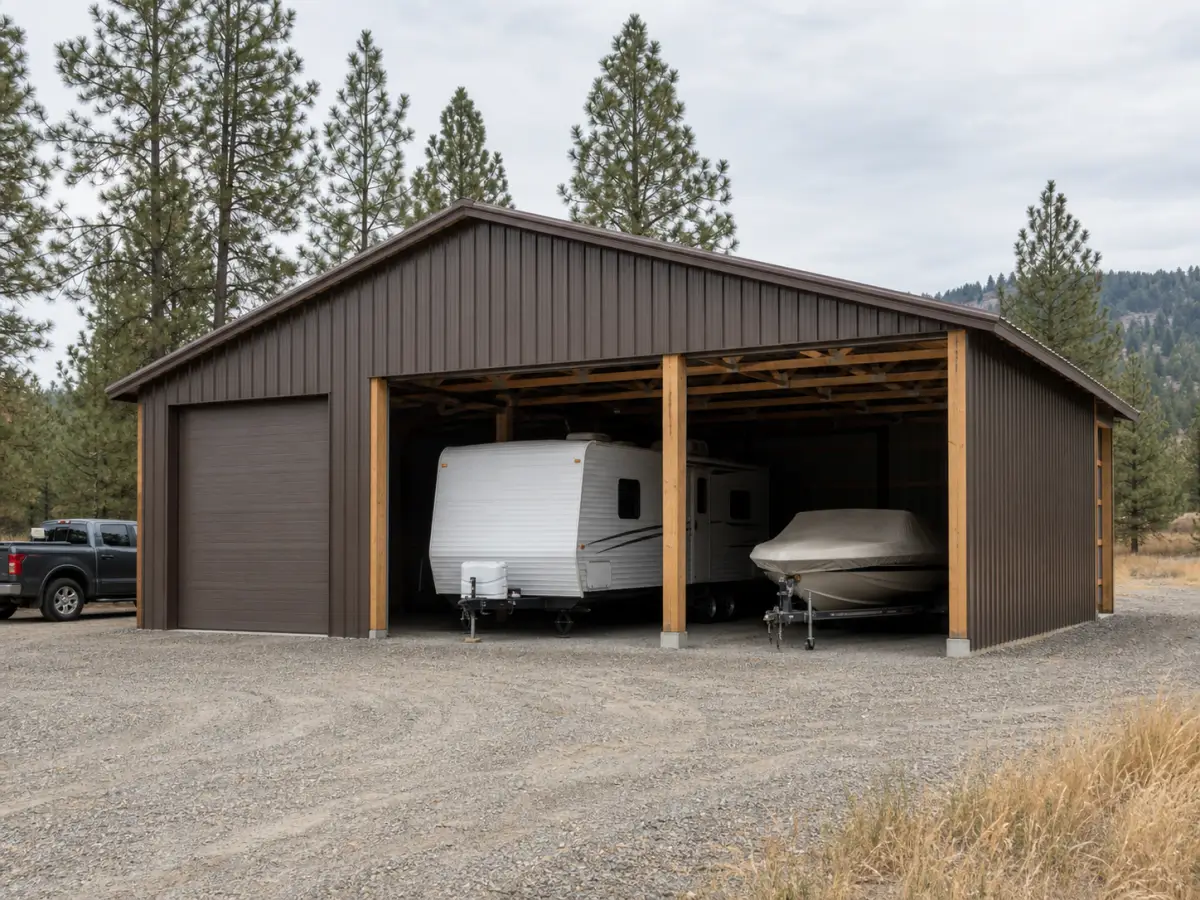
Clear-height carports and enclosed bays for RVs, boats, and trailers, open-sided or fully secured.
RV & boat storage details →Spokane Pole Building Co. is a routing brand, not a contractor. Every builder in the network is expected to carry current registration in the state where the work happens, and property owners should confirm that registration directly before signing anything.
Washington requires construction contractors, including post-frame builders, to register with the Department of Labor & Industries under RCW 18.27. There is no separate pole-barn category: the same registration applies, with bond minimums of $30,000 for a general contractor or $15,000 for a specialty contractor, and liability minimums of $200,000 per occurrence for a specialty contractor or $250,000 combined for a general contractor.
Idaho takes a different approach. Contractor registration, not licensure, is required for any job over $2,000 in combined labor and materials under Idaho Code Section 54-5201 and Section 54-5209, unless a specific exemption under Section 54-5205 applies. The two states are not interchangeable, and a builder registered in one is not automatically compliant in the other.
A pole barn in Spokane is usually a post-frame shop, garage, or agricultural building on one parcel. Spokane Pole Building Co. refers that request to independent contractors and does not perform the work. Figures are from Spokane County Building and Planning, and from the City of Spokane when the lot is inside the city. They are public ranges, not an approval.
Unincorporated Spokane County requires a building permit for a full-size pole barn. Brochure BP-25 exempts some one-story tool and storage sheds, playhouses, and similar uses only at 200 square feet or less. County brochure BP-32 is the residential and agricultural pole building detail: up to 36 feet of truss span, 3,000 square feet, and ground snow not over 43 pounds per square foot, with 30 pounds per square foot on the roof. Past those caps, the building needs an engineered design. Cities do not use BP-32. See pole barns in Spokane Valley and Liberty Lake.
Brochure BP-06 lists 39 pounds per square foot ground snow, a 30 pound per square foot minimum roof snow load, and a 24-inch frost line. The director can require a higher snow load from local climate, topography, and the Structural Engineers Association of Washington Snow Load Analysis. A county manufactured-home brochure notes snow loads above 100 pounds per square foot in some areas. The City of Spokane uses the same 39 and 30 pound figures and a 24-inch frost line in its design-criteria table. Its BP-14 sheet caps a non-engineered pole building at 3,000 square feet including lean-tos, 36 feet wide, and 39 pounds per square foot ground snow. A joint city and county frost policy sets footings at least 24 inches below grade, and may allow 18 inches for a detached residential accessory structure. North Idaho snow load is set locally, not by the Spokane County table. See the cost guide for how snow load moves price.
Typical ranges, not buildings this referral has built, run from a 24 by 36 garage to a 36 by 60 barn, about 860 to 2,160 square feet, when width stays at 36 feet and area stays within 3,000 square feet. A 40-foot width needs engineering. Towns covered include Spokane Valley, Mead, Deer Park, Nine Mile Falls, Cheney, Liberty Lake, Colbert, and Medical Lake, plus Spokane. Mead, Colbert, and Spokane County addresses in Nine Mile Falls usually use the county counter. Nine Mile Falls also enters Stevens County, outside this referral. The cities above issue their own permits.
Spokane Pole Building Co. routes projects across two states, each with its own permitting rules. Unincorporated Spokane County uses brochure BP-32 for qualifying pole buildings, while cities such as Spokane Valley use their own counters. Unincorporated Kootenai County exempts only small detached accessory structures, not full-size shops or barns. City rules for Spokane Valley and Liberty Lake are on the Spokane Valley pole barn page.
Spokane, Spokane Valley, Liberty Lake, Cheney, Airway Heights, Deer Park, Medical Lake, Mead, Colbert, and Nine Mile Falls.
Coeur d'Alene, Post Falls, Hayden, Rathdrum, Athol, and Dalton Gardens in Kootenai County.
See the full service area breakdown, including which permit rules apply where you're building.
A pole barn and a pole building use the same post-frame construction method: pressure-treated posts set on footings carry the roof load without a continuous perimeter foundation. "Barn" usually signals agricultural use, while "pole building" covers shops, garages, barndominiums, and storage structures built the same way. Neither term implies a specific size or finish level on its own.
In most cases yes, though the pathway varies by jurisdiction. The City of Spokane allows non-engineered pole buildings up to 3,000 square feet and 36 feet wide under its BP-14 guide sheet, while unincorporated Kootenai County exempts only small detached accessory structures. Confirm the exact rule for your parcel before you plan a build.
Jurisdictions inside city limits, like Coeur d'Alene or Post Falls, follow their own codes rather than the county exemption, so where the lot sits changes the answer.
Spokane County brochure BP-06 lists a 39 pound per square foot ground snow load, a 30 pound per square foot minimum roof snow load, and a 24-inch frost line. The director can require more on a higher parcel. Non-engineered brochure BP-32 stops at 43 pounds per square foot ground snow and a 30 pound roof snow load.
People often plan a 24 by 36 or 30 by 40 garage, a 30 by 48 shop, or a 36 by 60 barn, about 860 to 2,160 square feet. Widths to 36 feet can fit the county non-engineered cap of 3,000 square feet. A 40-foot-wide building needs engineering. These are typical ranges, not builds by this referral service.
Planning ranges run from roughly $15 to $35 per square foot for a kit or DIY shell, $35 to $75-plus per square foot turnkey, and $80 to $150-plus per square foot finished and insulated, before site work or foundation costs. See the full cost guide for the size and finish factors that move a specific project up or down.
Timelines vary with building size, permitting pace, and Inland Northwest weather, so a builder will typically give you a project-specific schedule rather than a fixed number. Post-frame construction is generally quicker to frame than stick-built because there is no continuous foundation to pour, but permitting and site prep still set the calendar.
Spokane Pole Building Co. only routes projects to builders who carry current Washington L&I contractor registration or Idaho contractor registration, plus liability coverage. Washington requires L&I registration under RCW 18.27 with set bond and liability minimums; Idaho requires registration for jobs over $2,000 in labor and materials unless a specific exemption applies.
Tell us the building type, rough size, and location, and a local post-frame builder will follow up.